Living in a rental and want to go low waste? Discover realistic, renter-friendly zero waste tips for tiny spaces that are practical, aesthetic, and landlord-approved.
If you’ve ever searched “zero waste living” and felt immediately overwhelmed by images of giant compost bins, full home renovations, and glass jar walls that clearly belong in a 3,000 square foot farmhouse, you are not alone.
The zero waste world has a small space problem. Most of the advice assumes you own your home, have outdoor space, and have the freedom to drill holes, install systems, and build whatever you want. But millions of people live in rentals, and many of those rentals are tiny.
The good news? Sustainable living is absolutely possible in a small rental apartment. It just needs to be approached differently, more realistically, and honestly, more creatively. Here’s how to do it without violating your lease, overwhelming your space, or burning yourself out.
The Renter’s Reality: Why Zero Waste Advice Usually Misses the Mark
Most zero waste content is written with homeowners in mind. Outdoor compost systems, permanent fixtures, and structural changes are often central to the advice, none of which apply when you’re renting.
Renters also tend to move more frequently, which means any sustainable system you build needs to be portable, easy to disassemble, and compact enough to fit in a moving van alongside everything else you own.
Then there’s the square footage issue. In a small apartment, every object competes for space. A bulky zero waste setup will make a tiny home feel chaotic rather than calm, which makes you less likely to stick with it.
The key is designing a low waste lifestyle that fits your actual life, not the aspirational life on someone else’s mood board. That means realistic swaps, minimal footprint, and systems that work with the natural flow of a small apartment.
1. Master the Art of Refusing Before You Ever Buy
The most powerful zero waste habit costs nothing and takes up zero space: learning to say no before an item even enters your home.
In a rental, especially a small one, every item you bring through the door either earns its place or creates clutter. Refusing unnecessary things before they arrive is the most renter-friendly sustainable habit you can build, because it requires no storage system, no special equipment, and no landlord permission.
What refusing looks like in practice:
Start by unsubscribing from promotional emails and unfollowing accounts that constantly make you want to buy things. Not as a punishment, but as a way of resetting your baseline. When you’re not constantly exposed to new products, your desire for them naturally decreases.
When you’re out and about, politely declining freebies, extra napkins, unnecessary packaging, and promotional items is a genuinely impactful habit. A bamboo straw in your bag means you can skip the plastic one at the café. A canvas tote in your purse means the shop’s plastic bag stays where it belongs, at the shop.
In a small apartment, the refuse habit pays double dividends. Less incoming stuff means less clutter, less storage pressure, and a home that feels more intentional and peaceful every single day.
2. Set Up a Compact, Portable Waste Sorting System
Here’s where most renters get stuck. Waste sorting sounds like it needs a big, dedicated space, but it absolutely does not.
A renter-friendly waste sorting system is compact, movable, and fits seamlessly into a small kitchen or utility corner. You’re not installing anything permanent, you’re simply being intentional about how you contain and sort what comes out of your home.
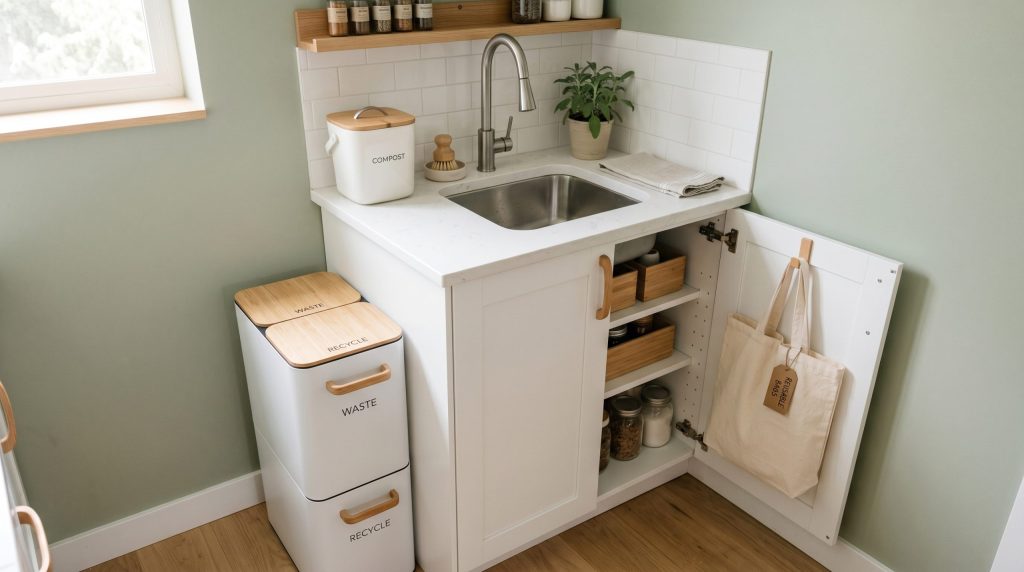
A simple setup that works in small rentals:
A slim pull-out bin with two compartments handles general waste and dry recyclables in a single footprint. Placed inside a lower cabinet or beside the fridge, it barely takes up any room and nothing needs to be mounted or drilled.
For food scraps, a small stainless steel or ceramic countertop compost bin with a tight lid is clean, odor-controlled, and sits discreetly beside the sink. If your building has a green bin or a nearby community compost drop-off, this is your link to that system. If not, a compact bokashi system (a small sealed bucket that ferments food waste) works brilliantly in apartments because it produces no smell, fits under a sink, and can be taken to a community garden when full.
For items that need special handling such as batteries, soft plastics, and small electronics, keep a labeled cotton bag on the inside of a cabinet door. Once it’s full, a quick trip to a local drop-off point keeps these items out of landfill without requiring any permanent infrastructure.
The goal is a system that runs quietly in the background of your life, not one that demands constant maintenance or takes over your kitchen.
3. Rethink How You Shop for Food
Grocery shopping is one of the highest-impact changes a renter can make, and it requires zero modifications to your apartment.
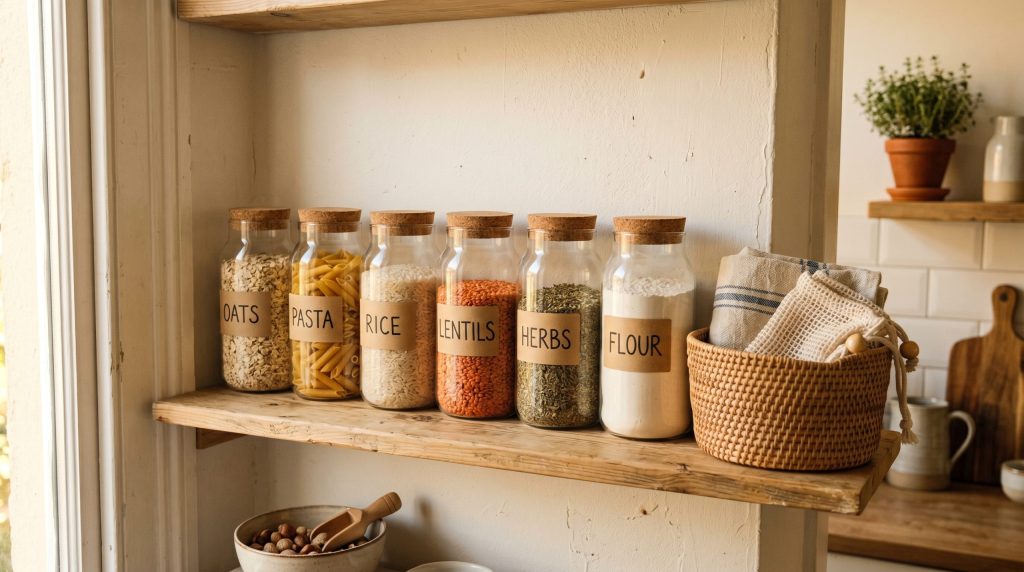
The packaging that comes in from a single weekly grocery run can fill an entire recycling bin. Switching even a portion of that shopping to low-packaging alternatives makes a meaningful dent without touching your walls, your lease, or your square footage.
Practical low-packaging grocery strategies for renters:
Farmers markets are genuinely one of the best resources for low-waste food shopping. Loose produce, no plastic trays, and the option to bring your own containers for things like cheese, olives, or deli items. They also tend to be less expensive for seasonal staples.
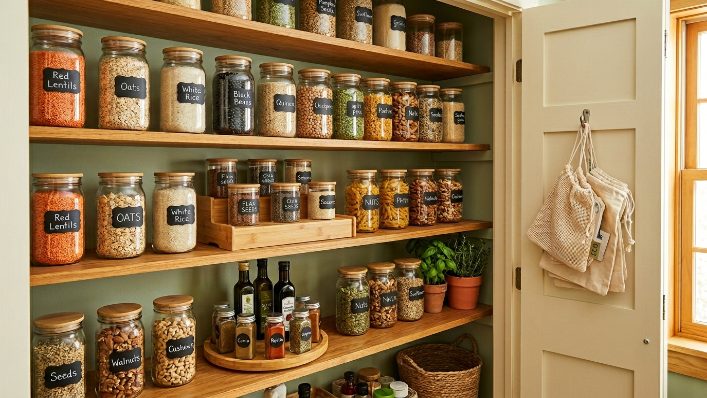
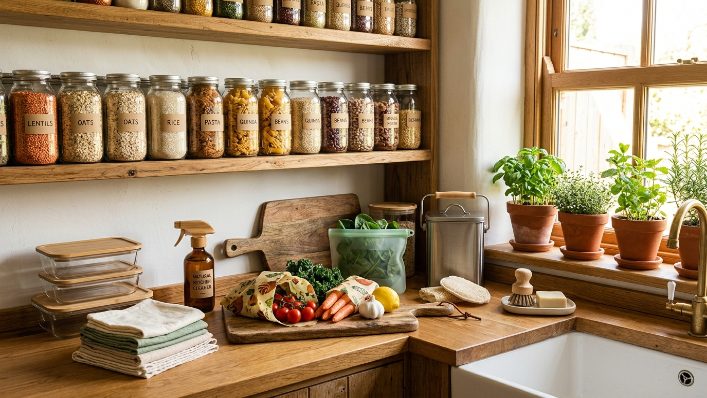
Bulk buying is less accessible for small space dwellers because storage is limited, but a selective approach works well. Prioritize buying in bulk for things you use every week and that store well in jars, things like oats, rice, pasta, lentils, nuts, and dried fruit. A set of ten glass jars on a shelf takes up very little space and eliminates a significant amount of weekly packaging.
Choosing products in glass or cardboard over plastic where the price difference is minimal is another small but consistent habit. Glass jars get reused. Cardboard composts or recycles more reliably than most plastics. Over a year of shopping, these small choices accumulate into a genuinely different impact.
4. Build a Low-Waste Personal Care Routine That Fits on One Shelf
Bathrooms in small rentals are notoriously tight on storage, and yet they’re one of the biggest sources of single-use plastic in the average household.
The great news is that the zero-waste personal care world has genuinely leveled up in the past few years. The products are better, the packaging is more beautiful, and the performance is on par with conventional alternatives. Transitioning to a low-waste bathroom routine doesn’t mean sacrificing the products you love, it means finding better versions of them.
What a low-waste bathroom shelf looks like in a small rental:
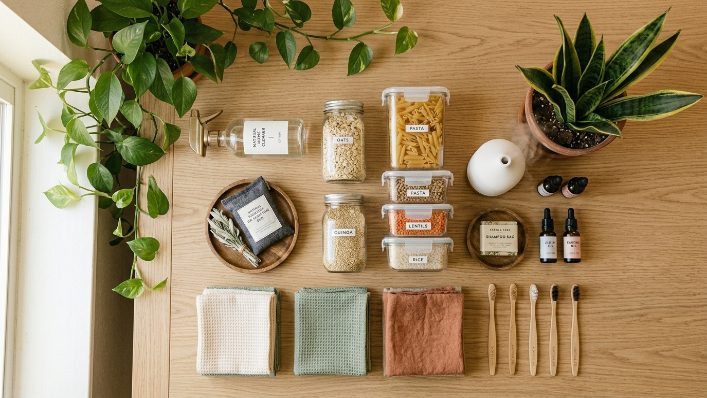
Shampoo and conditioner bars replace two plastic bottles with a small ceramic dish. They last significantly longer per use than liquid alternatives and take up a fraction of the shelf space. A bamboo toothbrush and compostable floss swap out two more pieces of plastic for materials that actually break down.
A reusable safety razor replaces the ongoing expense and waste of disposable plastic razors. The upfront cost is higher, but a single handle lasts years and the only thing you replace are the small recyclable metal blades.
Switching from disposable cotton rounds to a set of washable cloth rounds or a soft muslin cloth eliminates another source of daily waste and fits easily into a small bathroom with your regular laundry.
Decanting everything into a small set of matching glass or ceramic containers, and keeping them on a tray, creates a cohesive, clutter-free shelf that genuinely looks beautiful in even the tiniest bathroom.
5. Furnish and Decorate Secondhand First
One of the most significant areas of waste for renters is furniture and home décor, especially when you move frequently and replace items often.
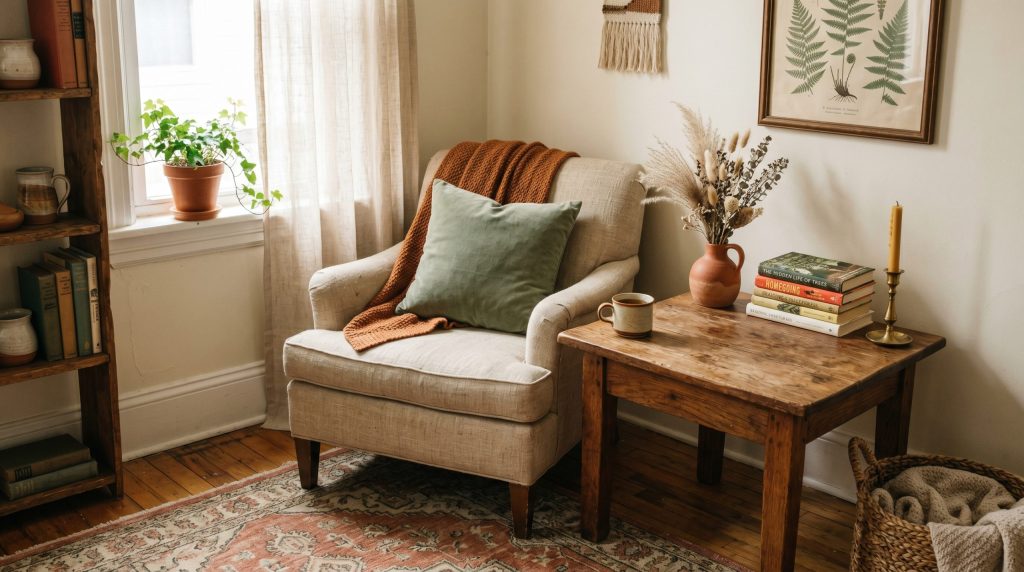
The conventional approach, buying new affordable furniture that doesn’t survive the move, then replacing it again at the next apartment, is an enormous source of waste and expense. The low-waste alternative is not just more sustainable, it’s more financially sensible and aesthetically interesting.
How to furnish a small rental sustainably:
Make secondhand your first stop, not your last resort. Facebook Marketplace, Vinted, local thrift stores, and charity shops regularly turn up beautiful, solid furniture at a fraction of the cost of new flatpack alternatives. A solid wood secondhand side table will outlast three generations of pressed particleboard.
When you do buy new, choose pieces that are built to last, versatile in style, and easy to move. A well-chosen sofa, a quality bed frame, and a few intentional pieces of storage are all you need in a small apartment. Everything else is negotiable.
For décor, plants and secondhand ceramics or art pieces bring enormous character to a small rental without generating waste. They’re also easy to restyle, move, or rehome when you move on to your next space.
The mindset shift here is from “affordable and disposable” to “affordable and durable.” In a small space, having fewer, better things is always the more beautiful and more sustainable choice.
Making It Work Long-Term
The most sustainable zero waste habit is the one you actually maintain. In a small rental, that means building systems that are genuinely easy, genuinely portable, and genuinely beautiful enough that you want to keep them.
You don’t need a perfect zero waste home. You need a home where waste is something you think about, make intentional choices around, and gradually reduce over time. That is entirely achievable in a small apartment, on a renter’s timeline, with a renter’s constraints.
Start with one habit from this list, the one that feels most natural or most exciting to you, and build from there. Sustainable living in a small rental is not about doing everything at once. It’s about doing something consistently, and letting that compound over time.
Save this post to your Pinterest boards for whenever you need a reminder that small space sustainable living is not only possible, it’s actually one of the most beautiful ways to live.