Living in a small apartment doesn’t mean you have to sacrifice style for sustainability or vice versa. In fact, small-space living and a low-waste lifestyle are practically made for each other. Less space naturally means less room for excess, and that’s a beautiful thing.
Whether you’re renting a studio, a one-bedroom, or sharing a compact flat, these five aesthetic low-waste habits will help you live more intentionally without making your home feel like a science experiment.
Why Low-Waste Living Works Better in Small Spaces
Before diving into the habits, let’s talk about why small apartments are actually the ideal environment for a low-waste lifestyle.
When you have limited square footage, every item you bring in needs to earn its place. That mindset, of intentionality and purpose — is the foundation of low-waste living. You’re not just reducing waste for the planet (though that absolutely matters); you’re also reducing visual clutter, cutting down on unnecessary spending, and creating a home that feels calm and curated.
The aesthetic side of sustainability isn’t a trend, it’s a long-term design philosophy. And in a small space, it genuinely shines.
1. Switch to a Refillable Cleaning Station
One of the easiest and most visually satisfying swaps you can make is building a refillable cleaning station in your kitchen or bathroom.
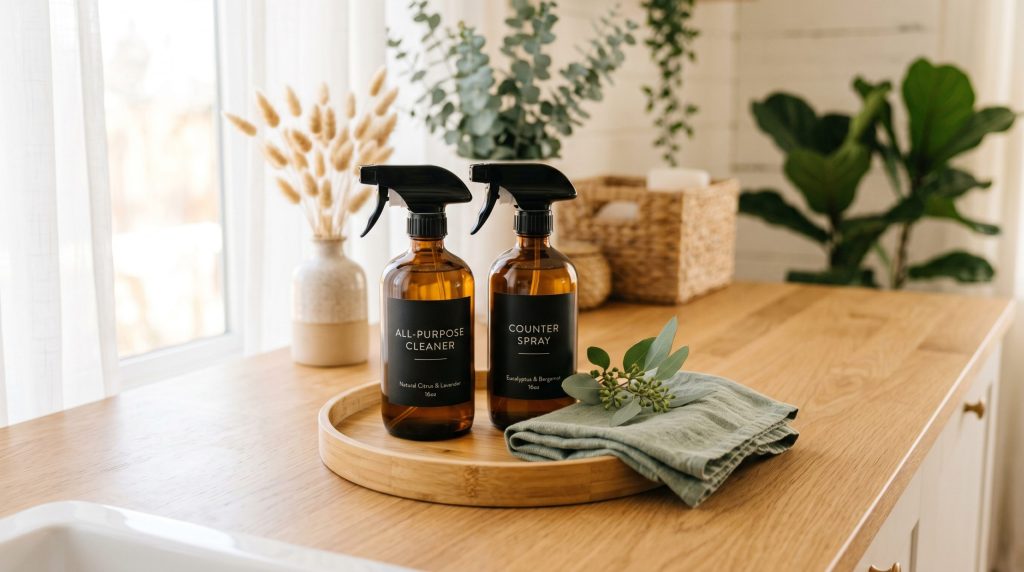
Instead of a dozen mismatched plastic bottles under your sink, imagine two or three beautiful glass spray bottles, neatly labeled, sitting on a small tray. That’s the low-waste cleaning setup — and it works perfectly in small apartments where cabinet space is precious.
How to get started:
- Buy a set of amber or clear glass spray bottles (they look gorgeous and last for years)
- Choose concentrate cleaning tablets or refill pouches — brands like Blueland, Meliora, or even DIY vinegar-based solutions work wonderfully
- Add a small bamboo or ceramic tray to corral everything together
Not only does this eliminate single-use plastic bottles, it also saves money in the long run. Concentrates are significantly cheaper per use than buying new bottles every month. And in a small apartment, having fewer products that do more is always a win.
Pinterest tip: Style your cleaning station with a small plant or a linen cloth nearby — it photographs beautifully and feels like a spa, not a chore.
2. Build a Capsule Pantry with Reusable Storage
The kitchen is where most household waste is generated, and it’s also where some of the prettiest low-waste transformations happen.
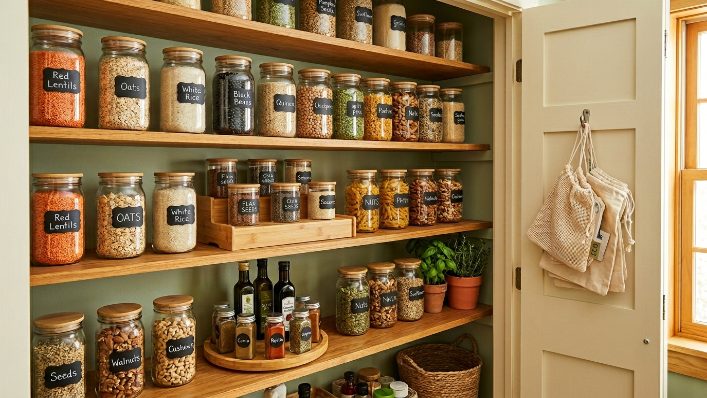
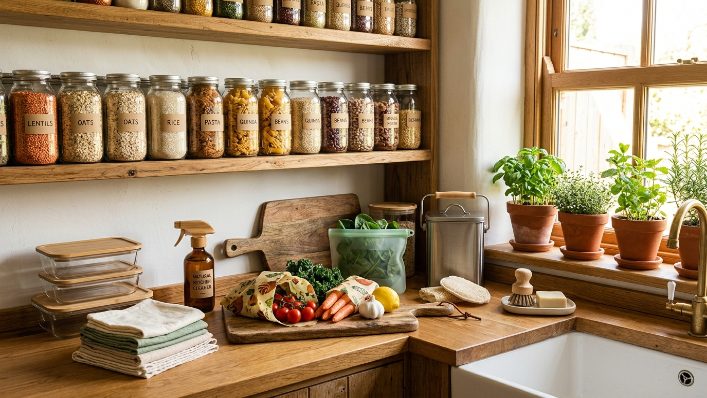
A capsule pantry means buying only what you’ll actually use, in bulk where possible, and storing it in reusable glass jars or containers. In a small apartment kitchen, this approach does double duty: it reduces waste and makes your pantry look incredibly organized and intentional.
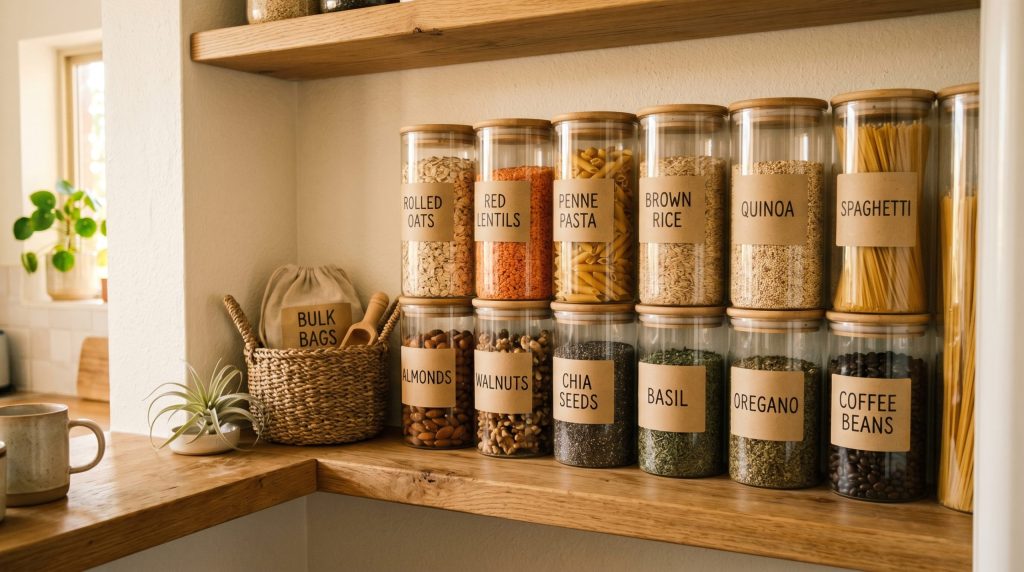
Think rows of matching glass jars filled with oats, lentils, pasta, nuts, and spices. No more half-open bags spilling into your cabinet. No more plastic packaging stacking up in your recycling bin.
How to build yours:
- Start with a set of 10–15 matching glass jars (thrifted mason jars or IKEA VARDAGEN jars are both great options)
- Shop at bulk stores or farmers markets when possible — bring your own bags and containers
- Label with chalkboard labels or minimalist kraft paper tags for that editorial pantry look
- Keep a small basket near the door for your reusable tote bags so you never forget them
This habit significantly reduces food packaging waste, helps you track what you actually use (so less food goes bad), and turns your kitchen into something you genuinely want to show off.
3. Embrace the “One In, One Out” Textile Rule
Textiles — towels, bed linens, throw blankets, clothing — are one of the most overlooked sources of household waste. The fashion and home textile industry generates enormous amounts of waste, and in a small apartment, the storage problem becomes very real very fast.
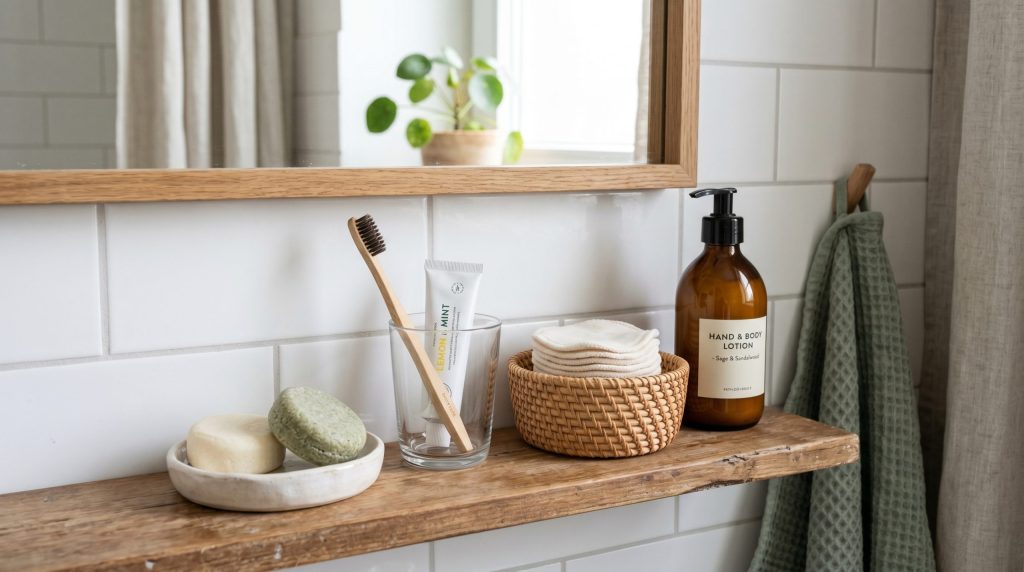
The one in, one out rule is simple: every time a new textile comes into your home, one goes out (donated, repurposed, or composted if it’s worn past use). This keeps your space from accumulating clutter while ensuring that what you do own is high quality and actually loved.
Make it aesthetic:
- Invest in a small, intentional linen collection — two sets of sheets, three to four towels per person, a couple of quality throws
- Choose a cohesive color palette (neutral linens, earthy tones, soft whites) so everything coordinates and your home feels curated
- Store folded textiles in a visible way — a rattan basket on a shelf, neatly rolled towels in an open bathroom shelf — so they become part of the décor
When you stop over-accumulating textiles, you also stop contributing to fast fashion’s waste cycle. You buy less, but you buy better — and in a small apartment, that restraint is what makes a space look elevated rather than stuffed.
4. Create a Waste-Sorting Corner That Looks Good
Let’s be honest: recycling bins are not attractive. But a thoughtful, well-designed waste-sorting corner can actually become a functional design element in your apartment — especially when space is limited.
The key is containment and intentionality. Instead of a stack of random bags or oversized bins taking up floor space, you want a compact, cohesive system that makes sorting easy and invisible.
Small apartment waste setup that works:
- A slim, double-compartment bin for general waste and recyclables (brands like Joseph Joseph make beautifully designed options)
- A small ceramic or stainless bowl on the counter for food scraps — if you have a balcony, a compact worm bin or bokashi system turns scraps into compost
- A cotton bag hung on the inside of a cabinet door for soft plastics, batteries, or other special recyclables
- A labeled basket or bin in the entryway for items to be donated
When your waste system is organized and visually cohesive, you’re also more likely to actually use it correctly. Sorting becomes a habit, not an afterthought — and less contaminated recycling means more actually gets recycled.
5. Use Multi-Use, Low-Waste Personal Care Products
The bathroom is often the most cluttered room in a small apartment, and it’s also full of single-use plastic. Shampoo bottles, conditioner, face wash, body wash, cotton rounds — the waste adds up fast.
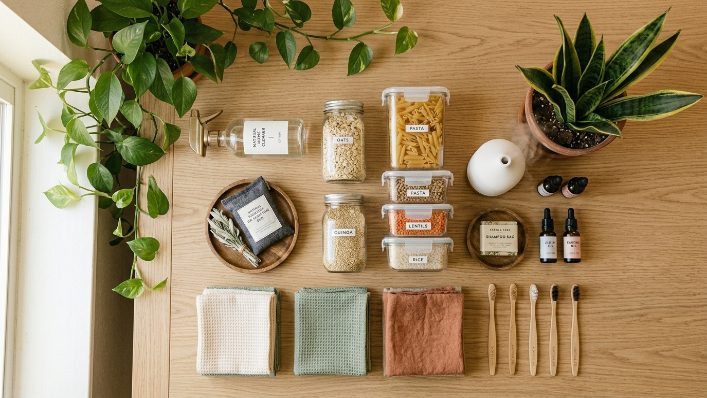
Switching to multi-use, low-waste personal care dramatically reduces both plastic waste and bathroom clutter. And the products themselves have become genuinely beautiful — think minimalist packaging, natural ingredients, and a clean, spa-like aesthetic.
The low-waste bathroom swap list:
- Shampoo and conditioner bars instead of bottles — they last 2–3x longer and free up shelf space
- A reusable safety razor instead of disposable plastic razors (the upfront cost pays off within months)
- Refillable or package-free face wash and moisturizer — brands like Lush, Ethique, or package-free local alternatives
- Washable cotton rounds or a soft muslin cloth instead of disposable cotton pads
- A bamboo toothbrush and compostable floss
In a small bathroom, fewer products also means more counter space, less visual chaos, and a much more serene morning routine. Style them on a small tray or wooden shelf and your bathroom becomes a lifestyle photo waiting to happen.
Bringing It All Together
The beautiful thing about low-waste habits in a small apartment is that sustainability and aesthetics reinforce each other. When you choose quality over quantity, refillable over disposable, and intentional over impulsive, your home naturally becomes calmer, more cohesive, and more you.
You don’t need to overhaul everything overnight. Start with one habit — maybe the cleaning station or the pantry jars — and notice how it shifts the energy of your space. Then build from there.
Small spaces don’t limit your lifestyle. They refine it.
Ready to start your low-waste apartment journey? Save this post to your Pinterest boards and come back to it whenever you need a little sustainable inspo. And if you try any of these habits, share them — I’d love to see your space.