Your kitchen is quietly draining your wallet, and you might not even realize it. Paper towels, plastic wrap, disposable bags, parchment paper, and single-use coffee pods seem small in the moment, but they add up to hundreds of dollars leaving your budget every single year. The good news? There are simple, beautiful, and genuinely effective reusable alternatives that pay for themselves within weeks.
This is not about sacrificing convenience. These swaps are practical, easy to adopt, and they make your kitchen feel more intentional and less cluttered. Whether you are just starting your sustainability journey or looking to tighten your household budget, these five reusable kitchen products are the ones worth knowing about.
1. Reusable Beeswax Wraps (Goodbye Plastic Wrap Forever)
Plastic wrap is one of the most frustrating and wasteful products in any kitchen. It tangles, sticks to itself, and cannot be recycled. Most households spend anywhere from $20 to $40 per year on plastic wrap alone, and that number climbs when you factor in aluminum foil used the same way.
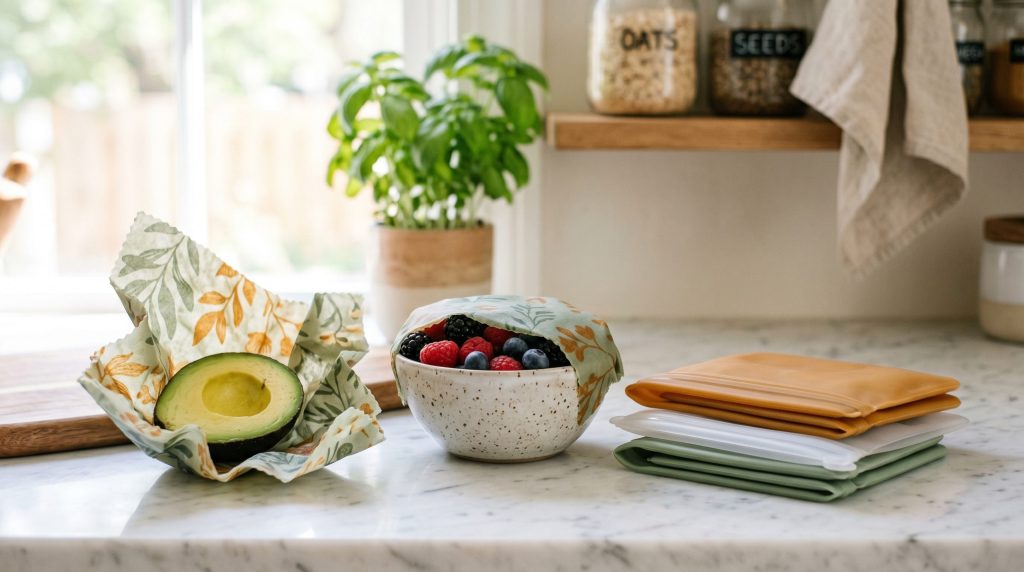
Beeswax wraps are a game-changing swap. Made from organic cotton infused with beeswax, tree resin, and jojoba oil, they mold to the shape of bowls, wrap around cut produce, and keep food fresh just as effectively. The warmth of your hands is all it takes to press them into shape.
A set of three beeswax wraps costs around $15 to $20 and lasts up to a full year with proper care. That is one purchase replacing 12 months of plastic wrap spending. Over two to three years, you save more than $60 just from this one swap, and you eliminate hundreds of feet of plastic from your home. Rinse them in cool water with mild soap and let them air dry. Simple.
Best for: Covering bowls, wrapping cheese, keeping half-cut fruits and vegetables fresh, storing bread.
2. Swedish Dish Cloths (Replace an Entire Year of Paper Towels)
The average American household spends between $80 and $120 per year on paper towels. That is a remarkable amount of money going directly into the trash, roll after roll. Swedish dish cloths are the reusable answer, and once you try them, it is very hard to go back.
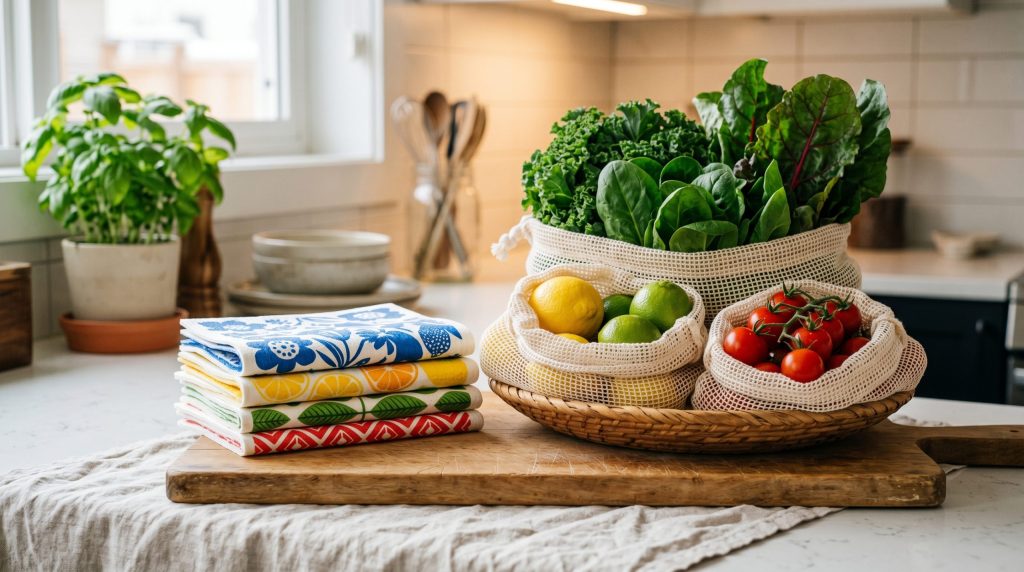
These cloths are made from a blend of natural cellulose and cotton, which makes them absorbent enough to replace 17 rolls of paper towels per cloth. They absorb water like a sponge, wipe down surfaces cleanly, and are dishwasher and washing machine safe. They dry quickly between uses, which prevents the musty smell that regular dish sponges develop.
A pack of five to eight Swedish dish cloths runs about $20 to $30 and can last six months to a year depending on how heavily you use them. Compare that to spending $100 or more annually on paper towels and the math becomes very obvious. You are also reducing the packaging waste that comes with buying new rolls every few weeks.
They come in dozens of patterns and colors, which means they can actually add personality to your kitchen rather than just sitting under the sink.
Best for: Wiping counters, drying dishes, cleaning spills, scrubbing light messes, drying hands.
3. Silicone Zip Storage Bags (The Ziploc Alternative That Actually Works)
Disposable zip-lock bags are another household staple that quietly costs a fortune. A box of 30 to 40 gallon-size bags costs around $7 to $10, and most households go through multiple boxes per year across different sizes. That adds up to $30, $50, even $80 annually depending on usage.
Silicone zip storage bags are leak-proof, airtight, freezer-safe, microwave-safe, and dishwasher-safe. They seal just as tightly as plastic zip bags, they lay flat to save freezer space, and they are built to withstand thousands of uses. A quality set of five silicone bags in various sizes costs $20 to $35 and should last five or more years.
That single purchase replaces years of disposable bag buying. The savings over five years easily exceed $150, and you eliminate a source of plastic that is rarely accepted by curbside recycling programs. They are especially useful for meal prepping, freezing soups and sauces, storing snacks, and marinating proteins.
Look for bags that are 100% platinum silicone, which is the food-grade, BPA-free formulation. Avoid bags that are mixed with fillers, as those tend to crack over time.
Best for: Freezing meals, marinating, storing cut vegetables and fruit, snack portioning, traveling with food.
4. Reusable Coffee Filters (Cut Pod and Paper Filter Costs Immediately)
Coffee is one of the most common daily rituals in any kitchen, and it is also one of the sneakiest budget drains. If you use a drip coffee maker, you are likely spending $10 to $20 per year on paper filters, which does not sound like much until you consider how easily that money is eliminated. If you use a single-serve pod machine, you could be spending $50 to $200 annually on pods alone.

Reusable coffee filters are a simple fix. A stainless steel or organic cotton reusable filter for a standard drip machine costs $10 to $15 and lasts years. It produces a slightly richer cup because it allows more of the coffee’s natural oils to pass through compared to paper filters. A reusable pod for Keurig-style machines costs about $10 to $20 and is compatible with any ground coffee, meaning you are no longer locked into buying pods at inflated prices.
The savings here compound quickly. Using your own ground coffee with a reusable pod instead of buying pods is typically 40 to 70 percent cheaper per cup. For a household that brews two cups per day, that difference adds up to over $100 saved per year, year after year.
Best for: Drip coffee makers, pour-over setups, Keurig and single-serve machines, cold brew straining.
5. Reusable Produce Bags (Replace Plastic Bags at the Grocery Store)
Every trip to the grocery store involves grabbing those thin, flimsy plastic bags from the roll in the produce section. Most households use five to fifteen of these bags per shopping trip without a second thought. While they are technically free at the store, they contribute to the plastic problem, and many areas are beginning to charge for or restrict them.
Reusable mesh produce bags are lightweight, breathable, and washable. They keep produce fresh by allowing airflow, they are easy to see through at checkout, and they weigh almost nothing on the scale. A set of eight to twelve bags in multiple sizes costs around $10 to $15 and will last for years of weekly grocery runs.
Beyond the waste reduction, these bags are genuinely more useful at home. You can use them to store bulk grains and nuts, organize items in the fridge, wash fruits and vegetables right in the bag, and even carry items like garlic and onions that need ventilation. They are one of the most versatile and underappreciated reusable products available.
Best for: Fruits and vegetables at the grocery store, storing leafy greens, organizing the fridge, washing produce, carrying bulk dry goods.
Start With One Swap
The most sustainable change is the one you actually stick with. You do not have to overhaul your entire kitchen at once. Start with whichever product you use most frequently and make that first swap. If you go through paper towels at a rapid pace, start with Swedish dish cloths. If you rely on your pod coffee machine every morning, get a reusable pod this week.
Each swap builds momentum. Within a few months, your kitchen will look cleaner, cost less to maintain, and create significantly less waste, all without sacrificing the convenience you rely on every day.
These five reusable kitchen products are not trends. They are practical tools that belong in every home. The savings are real, the quality is there, and the impact speaks for itself.
Which of these swaps are you trying first? Save this post to your Pinterest board so you can come back to it on your next shopping trip.