The modern kitchen is supposed to be the heart of the home. A place where good food gets made, where people gather, where the day begins and ends with something nourishing. But for most households the modern kitchen is also quietly one of the most chemically compromised rooms in the entire home, filled with products that off-gas synthetic compounds into the air, leach chemicals into food, and introduce a steady stream of plastic and toxic materials into daily life without anyone really noticing or questioning it.
The shift toward a non-toxic kitchen does not require a renovation or a complete overnight overhaul of every product and habit you have built over years of cooking. It requires identifying the seven most impactful categories of conventional kitchen products and replacing each one with a non-toxic alternative that works just as well or better in every practical sense.
These seven essentials are not about perfection or purity. They are about making the kitchen a place where the food you prepare is not being undermined by the vessels and products surrounding it. A cleaner kitchen, a healthier kitchen, and genuinely a more beautiful and functional kitchen all at the same time.
1. Cast Iron or Stainless Steel Cookware
The cookware you use every single day has a more direct impact on the chemical composition of your food than almost any other kitchen product. Conventional non-stick cookware coated with polytetrafluoroethylene, commonly known by the brand name Teflon, has been at the center of health and environmental concerns for decades. When non-stick pans are heated above a certain temperature, which happens easily and quickly during normal cooking, the coating begins to break down and release perfluorocarbon compounds into your food and your kitchen air. The pan itself also degrades visibly over time as the coating scratches and chips, releasing fragments of the synthetic coating directly into whatever you are cooking.
Cast iron cookware is the oldest and most proven non-toxic alternative available. A well-seasoned cast iron pan develops a naturally non-stick surface through a layer of polymerized oil that requires no synthetic coating and introduces nothing harmful into your food. Cast iron pans last for generations with basic care and actually improve in performance over years of use as the seasoning builds and deepens. A quality cast iron skillet costs between twenty and fifty dollars and will outlast every non-stick pan you have ever owned.
Stainless steel cookware is the other excellent non-toxic option for a modern kitchen. Food grade 18/8 stainless steel contains no coatings of any kind and introduces no chemicals into food under any cooking conditions including high heat and acidic foods. Stainless steel pans require slightly more cooking skill than non-stick to prevent sticking but with the right technique and temperature management they handle every cooking task beautifully. A quality stainless steel pan costs more upfront than a cheap non-stick but lasts for decades without any degradation in safety or performance.
Ceramic coated pans are a middle ground option that many people find easier to transition to from non-stick. The ceramic coating is free of the synthetic compounds found in conventional non-stick and is generally considered safe under normal cooking temperatures. The coating does wear over time more quickly than cast iron seasoning but significantly more slowly than conventional non-stick, making ceramic coated pans a practical stepping stone for anyone not yet ready to commit to the technique adjustments required by cast iron or stainless steel.
2. Glass and Stainless Steel Food Storage
Food storage is one of the most impactful areas of the non-toxic kitchen because it involves prolonged contact between food and whatever material it is stored in, often under conditions of heat, acidity, or freezing that accelerate chemical migration from synthetic materials into the food itself.
The case for replacing plastic food storage containers with glass and stainless steel alternatives has been made comprehensively by decades of research into the migration of BPA, BPS, phthalates, and other plastic additives into food. What the research consistently shows is that this migration happens under everyday conditions including microwave heating, dishwasher washing, and long-term storage of acidic foods, and that it happens even with containers labeled BPA-free because the replacement chemicals used carry similar risks.
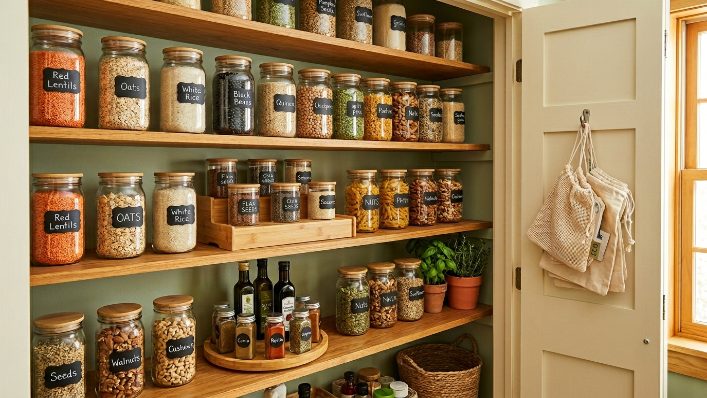
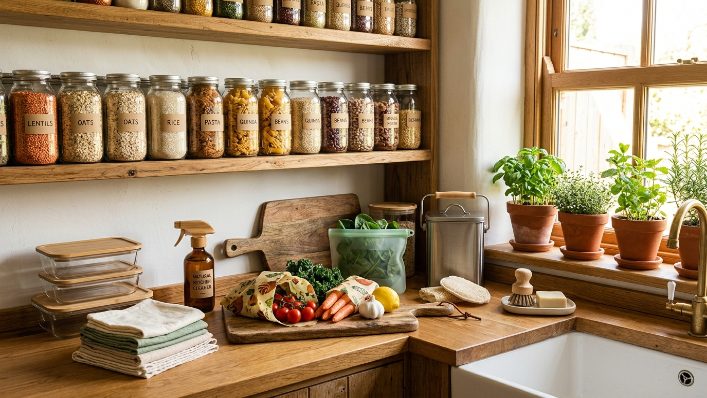
Glass containers eliminate this concern entirely. Glass is a fundamentally inert material that does not interact chemically with any food under any storage or heating condition. A set of borosilicate glass containers with snap lock silicone lids handles every food storage need in a modern kitchen from freezing to oven reheating to microwave use without introducing any chemical risk whatsoever. They also last for decades compared to the one to three year practical lifespan of most plastic containers and look genuinely beautiful stacked on a shelf or lined up in a fridge.
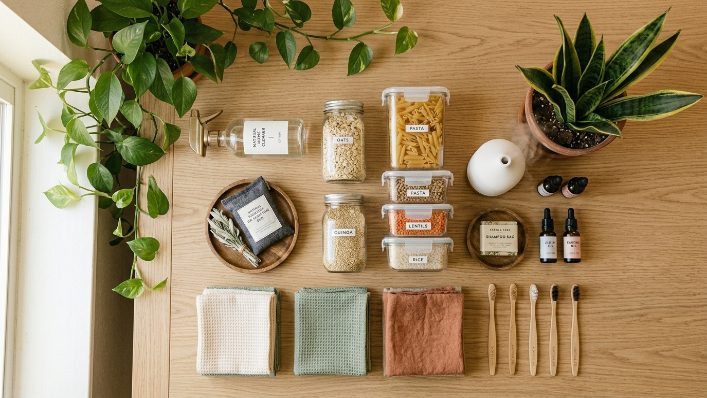
Mason jars deserve special recognition as the most versatile and cost-effective glass storage solution available. They store dry goods in the pantry, liquids in the fridge, batch cooked meals in the freezer, and packed lunches on the go with equal ease and without requiring any additional investment beyond the jars themselves. A collection of wide mouth mason jars in pint and quart sizes forms the backbone of a non-toxic food storage system that costs less than an equivalent collection of plastic containers and performs better in every measurable way.
Stainless steel containers provide the unbreakable and lightweight complement to glass for situations where portability matters. A stainless steel water bottle, travel mug, and lunch container together eliminate the most consistent daily sources of plastic contact from food and drink in a modern lifestyle.
3. Natural Fiber Cleaning Tools
The tools you use to clean your kitchen surfaces, dishes, and cookware represent a category of non-toxic kitchen essentials that most people never think to examine. Conventional kitchen cleaning tools including synthetic sponges, plastic scrubbing pads, and plastic-handled brushes are made entirely from materials that shed microplastic fibers into your kitchen environment and ultimately into your food and water supply.
The conventional yellow and green synthetic kitchen sponge is one of the most microplastic-shedding and bacteria-harboring objects in any kitchen. Its synthetic foam and nylon scrubbing layers shed plastic microfibers with every use and its porous structure provides an ideal environment for bacterial growth between uses. Research has found that kitchen sponges harbor more bacteria per square centimeter than almost any other household object.
A wooden dish brush with natural plant fiber or boar bristle is the most effective and sustainable replacement for the synthetic sponge. It cleans dishes and pots thoroughly, dries between uses because of its solid wood handle and naturally ventilated bristle construction, and harbors significantly less bacteria than a synthetic sponge as a result. When the bristle head eventually wears out only the head needs replacing rather than the entire brush. The worn head can be composted rather than sent to landfill.
Loofah scrubbers made from the dried loofah gourd provide natural scrubbing power for dishes, pots, and surfaces and can be composted at the end of their life. Cotton dish cloths and knitted cotton scrubbers replace paper towels and synthetic cleaning wipes for everyday surface cleaning tasks. A natural sea sponge provides gentle cleaning for delicate surfaces and is harvested sustainably from renewable ocean sources.
A complete set of natural fiber kitchen cleaning tools costs between fifteen and thirty dollars and eliminates synthetic microplastic shedding from your kitchen cleaning routine entirely while performing every cleaning task more effectively than the synthetic tools they replace.
4. A Natural Cleaning Product Kit
Commercial kitchen cleaning products are among the most chemically aggressive household products available and are used in the room where food is prepared which makes their chemical composition particularly important to examine and address. Most conventional kitchen cleaning sprays, degreasers, and surface cleaners contain synthetic surfactants derived from petroleum, artificial fragrance compounds that represent undisclosed mixtures of potentially hundreds of individual chemicals, preservatives, and various other synthetic additives that off-gas into kitchen air and leave chemical residue on surfaces that come into contact with food.
The natural cleaning kit that replaces this entire collection of commercial products consists of three ingredients that together handle every cleaning task a modern kitchen requires. White vinegar diluted fifty-fifty with water in a glass spray bottle disinfects and cleans counters, stovetops, appliances, sinks, and most other kitchen surfaces effectively and safely. The acetic acid in white vinegar kills the majority of common household bacteria and the solution evaporates completely leaving no residue.
Baking soda provides the gentle abrasive cleaning power needed for tougher kitchen tasks. It removes baked-on grease from stovetops and ovens, soap scum from sinks, and stubborn stains from surfaces without scratching. Combined with white vinegar it produces a fizzing reaction that clears slow drains without any of the aggressively caustic chemicals in commercial drain cleaners that are among the most dangerous products found in any kitchen.
Concentrated castile soap diluted appropriately in warm water handles dish washing, floor cleaning, appliance cleaning, and any task that requires a soapy rather than a vinegar-based approach. A single bottle of concentrated castile soap replaces multiple different commercial products, costs a fraction of the equivalent collection of specialty cleaners, and comes in a much smaller packaging footprint.
This three ingredient kit costs around five to ten dollars to assemble from scratch and handles every cleaning need in a modern kitchen without introducing a single synthetic chemical into your food preparation environment.
5. A Wooden or Bamboo Cutting Board
The cutting board is one of the most used surfaces in any kitchen and also one of the most overlooked sources of chemical and bacterial contamination in a conventional kitchen setup. Plastic cutting boards are the standard recommendation in most conventional cooking resources on the grounds that they are non-porous and therefore more hygienic than wood. Research has consistently challenged and complicated this assumption in ways that make wood and bamboo cutting boards the genuinely superior choice both for food safety and for non-toxic kitchen living.
Plastic cutting boards develop knife grooves and scratches over time that create channels and crevices where bacteria can accumulate and that are impossible to fully sanitize with normal washing. Research has shown that these scratched plastic surfaces harbor bacteria more persistently than wood surfaces under equivalent conditions. Additionally as plastic cutting boards are used and washed over time they shed microplastic particles that end up directly on the food being cut and ultimately in the bodies of the people eating it.
Hardwood cutting boards made from maple, walnut, or cherry have natural antimicrobial properties that actively inhibit bacterial growth in the wood surface. The cellular structure of hardwood closes around knife cuts rather than channeling them which prevents bacteria from establishing in the cutting surface over time. Wood cutting boards are also significantly more gentle on knife edges than plastic or glass alternatives which extends the life and sharpness of your kitchen knives.
Bamboo cutting boards offer similar benefits to hardwood at a lower price point and with a higher sustainability credential since bamboo is one of the fastest growing and most renewable plant materials available. Bamboo is naturally antimicrobial, extremely hard, and resistant to moisture damage when properly maintained.
Care for a wooden or bamboo cutting board by washing by hand rather than in the dishwasher, drying immediately after washing, and conditioning periodically with food-grade mineral oil or beeswax to prevent cracking and maintain the water-resistant surface that keeps the board hygienic.
6. Beeswax Wraps and Silicone Bags
The category of kitchen wrapping and sealing products is one that generates an enormous and almost invisible stream of single-use plastic waste in most kitchens while also introducing synthetic chemicals into direct contact with food on a daily basis. Plastic wrap releases plasticizers into fatty and acidic foods it comes into contact with. Zip lock bags expose food to BPA and phthalates particularly when used for storage over extended periods or for foods with high fat or acid content. Aluminum foil, while not a plastic, is an energy-intensive material to produce and is rarely recycled due to food contamination.
Beeswax wraps made from organic cotton infused with beeswax, tree resin, and jojoba oil replace plastic wrap for virtually every task it performs in a modern kitchen. They cling to surfaces and mold around food using the warmth of your hands, keep cut produce fresh, cover bowls and containers, wrap sandwiches and snacks, and seal partially used vegetables and fruits. They are washable, reusable for up to a year, and fully compostable at the end of their life. They also look genuinely beautiful with their natural colors and patterns, adding warmth and intentionality to a kitchen in a way that a roll of plastic wrap never could.
Platinum-grade silicone bags replace zip lock bags for tasks requiring a more robust and waterproof seal. Food-grade platinum silicone contains no BPA, phthalates, or other chemicals of concern, handles temperatures from freezer cold to boiling water, and can be washed and reused hundreds of times. A set of silicone bags in two or three sizes handles snack storage, produce storage, liquid storage, marinating, sous vide cooking, and freezer storage with equal ease and zero ongoing waste.
Together beeswax wraps and silicone bags eliminate plastic wrap and disposable zip bags from the kitchen completely representing a significant reduction in both plastic waste and daily chemical exposure from food contact materials.
7. A Water Filtration System
The water that comes out of your kitchen tap is treated with a range of chemicals before it reaches you including chlorine and chloramine used for disinfection, fluoride added in many municipal water systems, and various other treatment chemicals that vary by location and water source. Beyond the treatment chemicals, tap water can also contain trace amounts of heavy metals, pharmaceutical compounds, agricultural runoff, and microplastics that pass through municipal treatment systems and arrive at your tap in low but measurable concentrations.
A kitchen water filtration system addresses these concerns by removing or reducing the most significant contaminants from your tap water before you drink it, cook with it, or use it to make coffee or tea. Filtered water also tastes noticeably better than unfiltered tap water in most locations which makes drinking adequate water throughout the day easier and more enjoyable.
A countertop or under-sink carbon block filter is the most effective and most eco-friendly household water filtration option available. Carbon block filters remove chlorine, chloramine, many heavy metals, volatile organic compounds, and various other contaminants through a process of adsorption as water passes through the dense carbon block. They do not require electricity to operate, produce no wastewater as a byproduct, and filter replacements are needed only every six to twelve months depending on usage and water quality.
A gravity-fed ceramic water filter is another excellent non-toxic option that requires no installation, no electricity, and no plumbing modifications making it ideal for renters. Ceramic filters with a carbon core remove the same range of contaminants as carbon block filters and last for years with periodic cleaning of the ceramic element.
Both of these filtration options are significantly more sustainable than bottled water which generates enormous quantities of single-use plastic waste, costs many times more per liter than filtered tap water, and is in many cases simply filtered municipal water repackaged in plastic and sold at a premium.
The Kitchen That Earns Its Name
The kitchen is called the heart of the home because it is where sustenance comes from. Where the food that builds and maintains your body is prepared every day. When the environment surrounding that food preparation is genuinely non-toxic, when the cookware introduces nothing harmful, when the storage keeps food pure, when the cleaning tools and products are safe and natural, and when the water is clean and filtered, the kitchen truly earns that description.
Building this kitchen does not happen in a single weekend. It happens gradually as you replace each conventional product with a better non-toxic alternative at the natural end of its useful life. It happens without drama or grand gestures, one cast iron pan, one glass container, one wooden brush at a time.
The result is a kitchen that is cleaner in every sense of the word. Cleaner surfaces, cleaner air, cleaner food, cleaner conscience. A modern home kitchen that does not just look good but genuinely functions in alignment with the health and values of the people who cook and eat within it every day.