Open your fridge right now. What do you see? If the answer is a chaotic mess of half-open containers, mystery leftovers pushed to the back, and vegetables wilting in the wrong drawer, you are not alone. Most people never learn how to properly organize a fridge and it ends up costing them a surprising amount of money every single month in wasted food.
But here is the thing. An organized fridge is not just about looking nice. It is about keeping your food fresh longer, wasting less, spending less at the grocery store, and reducing the amount of plastic and packaging you bring into your home. When you combine smart organization with eco-friendly habits, your fridge becomes one of the most powerful tools for living a greener and more budget-friendly life.
This guide covers everything from top shelf to bottom drawer so you can build a fridge that works beautifully every single day.
Why Fridge Organization Actually Matters
Before getting into the how, it helps to understand the why. The average family throws away between $1,500 and $2,000 worth of food every single year. A huge chunk of that waste happens because food gets lost at the back of the fridge, stored in the wrong place, or not sealed properly. Disorganized fridges also make you buy duplicates of things you already have because you simply cannot see what is in there.
Beyond the money, all that wasted food creates a serious environmental problem. When food ends up in landfills it breaks down and produces methane gas, which is one of the most powerful greenhouse gases contributing to climate change. The simple act of organizing your fridge properly reduces food waste which directly reduces your environmental footprint.
An organized fridge also runs more efficiently. When cold air can circulate freely around properly stored food, your fridge does not have to work as hard to maintain its temperature. That means lower electricity bills every month.
Step One: Empty Everything Out First
The only way to properly organize a fridge is to start completely fresh. Take everything out, wipe down every shelf and drawer with a simple solution of warm water and white vinegar, and check the expiry dates on everything as you go.
White vinegar is the perfect eco-friendly fridge cleaner. It kills bacteria, removes odors, and leaves no chemical residue behind. Mix one part white vinegar with one part water in a spray bottle and use it on every surface. It costs almost nothing compared to commercial cleaning products and is completely safe around food.
As you empty the fridge, sort everything into three groups. Things that are still good and will go back in. Things that are expired and need to be thrown away. And things that are close to expiring and need to be used in the next day or two. This sorting process alone will give you a much clearer picture of what you actually have.
Understand the Temperature Zones in Your Fridge
This is the most important thing most people never learn about fridge organization. Your fridge is not the same temperature everywhere inside. Different zones have different temperatures and knowing which food belongs where makes a massive difference in how long everything stays fresh.
The top shelves are the warmest part of the fridge. This is where you should store foods that do not need intense cold and are ready to eat without cooking. Think leftovers in sealed containers, drinks, herbs stored in a small glass of water, and ready-to-eat foods like hummus, dips, and yogurt.
The middle shelves are where the temperature is the most consistent and stable. This is the best place for dairy products like milk, cheese, and butter. These items need reliable cold but not the most extreme temperatures in the fridge.
The bottom shelves are the coldest part of the fridge because cold air sinks. This is where raw meat, poultry, and fish should always be stored. Keeping raw proteins at the very bottom also prevents any drips or leaks from contaminating other foods below them, which is an important food safety habit.
The door is actually the warmest spot in the entire fridge because it gets exposed to room temperature air every time you open it. Despite what most fridge designs suggest, milk should never be stored in the door. The door is best for condiments, juices, and other items with high salt, sugar, or vinegar content that naturally preserves them at slightly warmer temperatures.
The crisper drawers at the very bottom are designed to control humidity to keep produce fresh longer. Most fridges have a high humidity drawer and a low humidity drawer. Leafy greens, herbs, broccoli, and vegetables that wilt quickly go in the high humidity drawer. Fruits, peppers, and vegetables that produce ethylene gas go in the low humidity drawer. Keeping these separated matters because ethylene gas from certain fruits speeds up the ripening and rotting of nearby produce.
Switch to Glass Containers for Everything
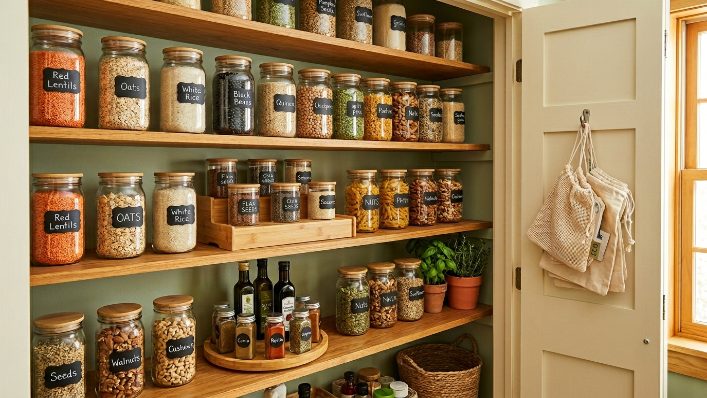
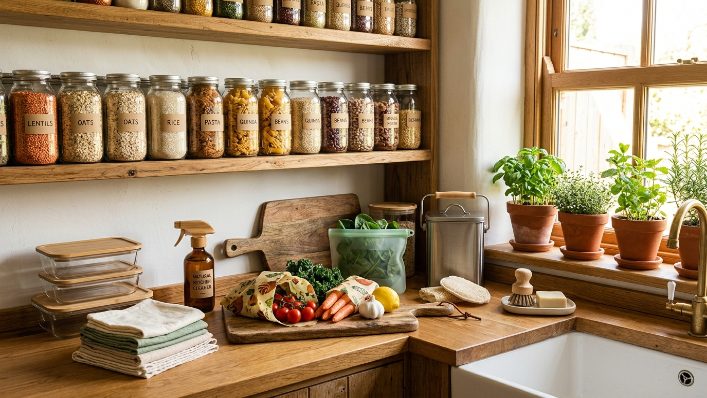
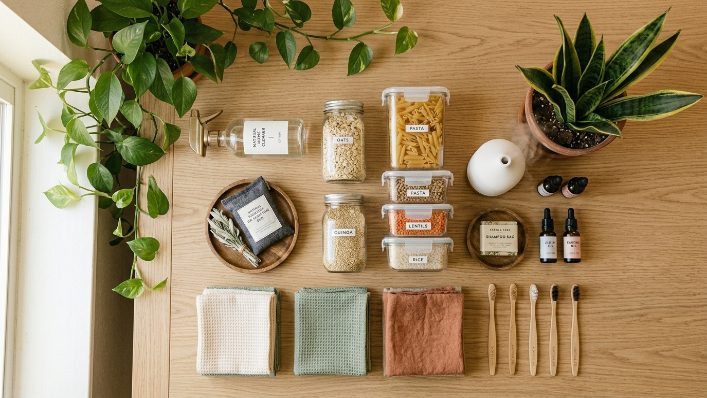
This single change makes the biggest visual and practical difference in any fridge. When everything is stored in matching glass containers with clear lids, you can see exactly what is inside at a glance. No more mystery leftovers. No more forgotten food rotting at the back.
Glass containers are the best eco-friendly choice for fridge storage for several reasons. They do not absorb smells or flavors the way plastic does. They do not leach any chemicals into your food. They are safe to go directly from the fridge to the oven or microwave. And they last for decades compared to plastic containers that crack, stain, and need to be replaced every few years.
A good starter set of glass containers with snap-lock lids costs around $30 to $50 and is one of the best kitchen investments you can make. Over time you can build your collection gradually. Prioritize a few different sizes so you have options for everything from a single serving of leftovers to a large batch of soup.
When all your containers match and are made of clear glass, your fridge instantly looks cleaner, more organized, and more intentional. It also makes it much easier to see when something needs to be used up before it goes bad.
Use a “Eat This First” Box
This is one of the smartest and most practical fridge organization habits you can build. Designate one clear container or a small bin on your middle shelf as the eat this first zone. Any food that is getting close to its expiry date, any leftovers from last night, or any produce that is starting to turn goes into this box.
Every time you open the fridge to make a meal or grab a snack, you check the eat this first box before anything else. This one habit alone can cut your food waste dramatically because it ensures the foods most at risk of going bad get eaten before they do.
You can use any clear container you already own for this. Label it with a small piece of masking tape and a marker. It costs nothing to set up and saves you money every single week.
Store Herbs Like Flowers
Most people stuff fresh herbs into the crisper drawer where they wilt and go slimy within a few days. There is a much better way to store them that keeps them fresh and vibrant for one to two weeks longer.
Treat your fresh herbs exactly like cut flowers. Trim the bottom of the stems and place them upright in a small glass or jar with about an inch of water at the bottom. Cover the tops loosely with a small reusable bag or a piece of beeswax wrap and place them on the top shelf of your fridge where the temperature is slightly warmer.
Herbs stored this way stay crisp, green, and full of flavor for significantly longer. Cilantro, parsley, basil, and mint all respond extremely well to this method. It also looks beautiful inside your fridge and makes grabbing fresh herbs for cooking quick and easy.
Use Beeswax Wraps Instead of Plastic Wrap
Plastic wrap is one of those single-use plastics that most people use constantly without thinking about it. Every time you cover half a lemon, wrap up a block of cheese, or seal a bowl, you use a piece of plastic that gets thrown away immediately after one use.
Beeswax wraps are a natural, reusable alternative made from cotton fabric coated in beeswax, tree resin, and jojoba oil. They cling to bowls, wrap around food, and seal containers just like plastic wrap. The warmth of your hands softens the wax enough to mold it into shape. When you are done, simply rinse with cold water and hang to dry.
A set of beeswax wraps in a few different sizes costs around $15 to $25 and can be used for up to a year before they need replacing. Over that time they replace hundreds of sheets of single-use plastic wrap. They also look wonderful in your fridge adding natural colors and patterns that make the whole space feel more intentional and aesthetic.
Organize Your Drawers With Small Bins
Even with the best intentions, fridge shelves can quickly become cluttered and disorganized again without some kind of structure. Small clear bins or baskets placed on your shelves create dedicated zones for different food categories so everything always has a place to return to.
Use one bin for dairy items like small cheese blocks and yogurt cups. Use another for snacks and small items that would otherwise get lost. Use a third for deli meats and packaged items. When everything has a designated bin, putting groceries away becomes fast and easy and the fridge stays organized without constant effort.
Look for bins made from recycled materials or clear glass rather than new plastic. You can often find suitable bins at dollar stores, thrift shops, or already in your home in the form of small food storage containers you are not using for anything else.
Keep a Fridge Inventory on a Dry Erase Board
One of the main reasons food gets wasted is because people forget what they have. They go to the grocery store and buy more of something they already have plenty of at home. Or they forget about the leftovers from three days ago until it is too late.
A small dry erase board or chalkboard placed on or near your fridge completely solves this problem. Write down everything inside your fridge and cross things off as you use them. When you add new items write them down. When you notice something getting close to its expiry date circle it as a reminder to use it soon.
This takes about 30 seconds to update after each grocery shop and saves a significant amount of food waste over time. It also makes meal planning much easier because you can see at a glance exactly what ingredients you have available to cook with.
Stop Overfilling Your Fridge
This is something most people do not think about but it has a direct impact on both food freshness and electricity use. An overfilled fridge cannot circulate cold air properly, which means food spoils faster and your fridge has to use more electricity to maintain the right temperature.
A fridge should be about three quarters full at most for optimal air circulation. If your fridge is consistently packed beyond that, it is a sign that you might be buying more food than you can realistically eat before it goes bad. Shopping more frequently in smaller amounts is more eco-friendly and actually results in fresher food every day compared to one giant weekly shop.
Leave visible space between items on your shelves. Do not stack things in ways that block the vents inside your fridge. Treat good air circulation as a non-negotiable part of how your fridge stays healthy and efficient.
Clean Your Fridge Weekly Not Monthly
Most people only deep clean their fridge every few weeks or even months, by which point things have spilled, smells have built up, and old food has been sitting forgotten in corners. A quick weekly wipe down takes only five minutes and keeps your fridge in a state you are proud to open.
Once a week when you are putting away new groceries, take a damp cloth with a splash of white vinegar and quickly wipe down the shelves you can see. Pull out any containers that are empty or nearly empty. Check the eat this first box and use what is in there that day.
This five minute weekly habit prevents the overwhelming monthly deep clean from ever being necessary. It keeps your fridge smelling fresh, looking organized, and functioning at its best all the time.
The Final Result
When you put all of these habits together, something genuinely satisfying happens. Your fridge stops being a source of stress and becomes something you actually enjoy opening. You waste less food, spend less money at the grocery store, use less plastic, and run a more energy-efficient appliance.
The aesthetic side matters too. A fridge full of clear glass containers, fresh herbs in small jars, colorful produce in clean drawers, and soft beeswax wraps on bowls looks genuinely beautiful. It reflects a level of care and intention that makes cooking feel more enjoyable and your whole kitchen feel more put together.
Start with just two or three changes from this guide this week. Switch to glass containers. Set up your eat this first box. Store your herbs properly. Those three changes alone will make a visible difference within days, and once you see how much better it works, the rest of the habits will follow naturally.